Thursday, October 28, 2010

Increase your performance with four easy steps

The best way to improve your performance in life is to measure, plan, change and review.  Want to improve your performance?  Lets view these four steps in action using physical fitness as our example.

  1. Start measuring.  Find some parts of your role/life that can be measured and measure them.  For example - how much time do you spend each day working on your fitness? 
  2. Start planning.  After you have your measurements then you will have a clear idea on where your issues may be and you can start planning on what and how you are going to improve.
  3. Start changing.  Put your plan into action.  Start making changes - small ones at first and then grow those changes into larger and bigger changes.  The important thing here is that the changes are incremental and sustainable in the long term.
  4. Start reviewing.  This is where you begin the cycle again from step one.  Look at where you were when you first measured, assess the plan - did it work?, were the changes too much - just enough - or too much?, then start all over again.

The more data and measuring you do, the easier it is to judge if you are improvinr or not.  Another aspect to this is getting a coach.  Find an expert who can look at your performance impartially and who can guide you towards making improvements.


Wednesday, October 27, 2010

Getting your customers attention - number 2

I love this video.  What happens is customers (movie goers) interact with the a part of the product (in this case a movie) and have a real life experience.
</object>
This is great.  Shifting a two dimensional experience into the real life - unforgettable!
This simple method of creating the customer experience is the glue that companies need to engage and entice with.  Get real people having real life experiences with your offering.

Tuesday, October 26, 2010

Teaming up with others is smart strategy

Meeting new people and developing relationships with others is one vital key towards future growth and success.  Step outside of your usual and comfortable circles of friends and take a risk.
I like to attend events with people with whom I would otherwise never meet or interact with.  One such person that I have met recently is Tabitha Roder.  Tabitha is an e-learning specialist and is involved with a project called 'olpc' (one laptop per child).  Now I had never heard of olpc or Tabitha (no offense) before I went to a conference.  I am so glad I took a risk, introduced myself and made a new friend.
The same goes for you.  Here's the challenge -
  1. Register for a conference where you know no-one and none of the content.
  2. Set yourself a goal of how many people you want to meet and have good converstaions with.  Example - 3 people per day.
  3. Get peoples business cards and contact details - and follow up!
"A man's growth is seen in the successive choirs of his friends."
Ralph Waldo Emerson

Monday, October 25, 2010

Growth and improvement is both constant and attainable

While reading the book 'Be Iron Fit' the author shares a very interesting anecdote about understanding what it takes to achieve and to be a better performer.  He shares a story where he was down on himself because he did not achieve the goal he set for himself when he tried.
Upon review he found that there was 1:40 seperating himself from the guy who beat him.  That equated to a 1% increase in performance.  How hard is it to increase performance by such a small amount?
I love the idea of this story in that with concentrated effort and small improvements then big changes can take place.  When you add together a number of 1% performance increases you can quickly move up to a 3% or 4% increase without noticing.
The same goes with being a good manager, marketer or mobiler.  Through changing our manufacturing methods, marketing returns on investment or ability for mobility then we can grow both ourselves and those around us.
Start by asking yourself the following question - where can I improve my performance by 1% in the next month?
Think about it - if you can improve what you do by 1% per month every month by the end of the year you will have increased your performance by a staggering 12%!
Try these quick areas to start changing and growing -
  • Communicating with others,  Say it once and say it clearly.  Don't repeat yourself.
  • Measure your statistics.  You need to know if what you are doing is actually affecting change or not. 
  • Re-evaluate what you do, how you do it, and why you do it.
  • Get someone else to assess you and tell you what they see.  Then change.
Growth takes time.

Saturday, October 23, 2010

The Mask of Command

Not everyone who is placed in a situation where leadership is required is able to command a sense of control.  Some people may even struggle with the thought that others are following them and are relying on them to blaze the way ahead.
When leading people it is important that someone takes charge.  At least one person has to take on the role of responsibility and accountability.  What is needed in the heat of the moment is that the leader at least appears to be in control.
In the book "The Mask of Command" John Keegan looks at this whole area by examining great leaders of history.
As modern leaders it is also important that when we are in charge we also work hard to at least appear to be in control.  So how do we do that?  Here are my thoughts -
  1. Start planning and implementing early.  In any situation the best way to exert control is to be the person with the plan.  By having a plan then you lead the way and others follow.  You decide what you want the final product to look like and start coordinating  everyone towards that goal.  Then get the plan rolling. 
  2. Get a consensus.  If you are going in a direction and no one is following you - then you are merely going for a walk.
  3. Double check your plan.  No plan is fool proof or 100% ready to roll when you start out.  When you are wearing the mask of command it is important that you get started on a path first, and then recheck your plan and path once you are rolling.  The idea is to create momentum and then the task of changing track is so much easier. More complex issues will arise if you have to complete a u-turn. 
  4. Public supporters count.  Let your closest supporters know that you expect a combined front of support from them in public.  Even if they vehemently oppose what you are trying to do or the methods you are undertaking.  When you are in charge it is vital that you have a support group that will be vocal in their support of you (at least in public).  One great saying I remember is 'praise publicly, criticise privately'.  That is if someone has an issue with the leader or the plan then they should agree with you in front of the entire group but have the ability to discuss it openly and frankly behind closed doors.
We have a saying at our Toastmasters club which I think is entirely appropriate for these situations - 'fake it until you make it'.  Check out this video which demonstrates this fact in a funny way - http://www.mayomo.com/65430

Friday, October 22, 2010

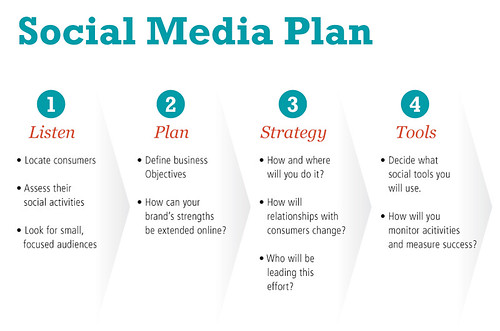
Social Media Planning - Marketing 101


Do the basics - marketing 101.  Social media - it's that simple.  Plan and execute.

Thursday, October 21, 2010

Knowing Your Styles Affects Your Project Management Skills

When you decide to start a new project or undertake a new event it is important that you get it right.  The easiest way to get it right is to understand who you are, what your strengths and weaknesses are as well as understand how you fit into the bigger picture.
Here is the way that I usually approach things and some of the lessons I have learnt when it comes to project and event management.
I usually try to get as much done as quickly as possible.  This is the classic boots and all approach.  All of the energy and ideas are created at the very beginning and are implemented very, very quickly.
Positives of this approach.  A plan is out together quickly and efficiently and the work gets started.  Big tasks are handled quickly and are moved off the list of things to do.  Energy levels are high and momentum can be created at this stage.
Minuses of this approach.  Stakeholders (internal and external) often are not consulted and a bulk of the projects are completed on the fly.  Often there is a lack of resources allocated and not all the possible scenarios are thought through.
What have I learned?
  • One key thing I have learnt is how I operate as a person and what my personality type is like.  I am a project starter and less of a project finisher.  I am good at spreading energy and enthusiasm early on and getting people to jump on board.
  • Small early wins lay the platform for bigger wins later.
  • I am aware that I need other people who have an eye for detail and who are better planners than I am.
  • I have also learnt that I need to engage internal stakeholder to assist with the project both at the beginning as well as bringing them in at later stages.
  • By spacing out your helpers getting involved you can use them to inject new levels of enthusiasm and energy as the project continues along. 
  • Early starters may need to drop out when they lose focus or momentum but that is not really a problem.  By releasing those people they can then revitalise themselves with a new project and if they want can rejoin your project at a later time.
So you there you go.  That's how I work.  I know what I'm good at and equally (hopefully) what I'm not so good at.  How about you?  What is your personality like and how does it affect the way you work?

Monday, October 18, 2010

Want new customers - get their attention! (Stand Out)

Getting peoples attention is the first step in getting them to engage as a customer.  Many people don't know that you exist or that you have a product or service that can help them out.

The key is getting those people to stop and look again at what it is that you have on offer.  If you have a product or offering that is just like everyone else's then you'll need to try really, really hard to get their attention.

If what you do is a little uncommon then you have a great chance of really engaging.  Like Seth Godin talks about the growth areas are on the outside of the circle, not in the middle.

So how do you do it?  How do you get people to stop? 
  1. Take a simple example from a complex method or process and explain it to people.  In the past week I used some little wooden shapes to get peoples attention and explained to them how wood processing works.  I also had a number of plant specimens and a microscope for people to look into.  Then I was able to explain to them what we do in plant biotechnology and science.
  2. Aim at people who aren't your target customers.  With the wooden kiwis I had I would look for older people (novelty value) and young kids (toys) to give them to.  Then with the older people I know that they will tell their family and friends about what they have and the kids get their parents to come and have a look at our stand and talk to me.  Its that simple.
  3. Get in peoples way.  This is the same as the two points above but more active.  Position yourself in such a way that people see you by chance and want to look at what you have on offer. 
The key is to get people to stop, talk and think about what you do.  If you can achieve these three things then you really are well on your way to gaining new customers.

Thursday, October 14, 2010

Out of Order


Due to travel and work this blog is out of order until further notice (or Monday - whichever happens first!)

Wednesday, October 13, 2010

Demonstrating Real Leadership

Real leadership is a persons ability to see a need or a gap and having the courage to take charge. 

Here is my example.  Today we had a large bunch (about 120) school kids jam packed into one small room and area.  They were fidgety unruly and generally noisy.  That's what kids do!

What I really did was show leadership. At this point in time the staff member who was co-ordinating the event had to go elsewhere because other staff members hadn't shown up.


Where the leadership aspect comes into play is where I took the lead and tried to get the kids attention and got them thinking about the environment they were in.  I did this by asking them questions, moving their attention away from themselves and interacting with them.

Then when the appropriate staff turned up I worked with the co-ordinator to get the kids heading in the right direction (focus groups).  In this case leadership was demonstrated through getting the kids (13 and 14 year olds) to focus on something bigger than them and something worthwhile.

Leadership was also displayed by the co-ordinator who made fast decisions, co-ordinated people, got responses and then debriefed at the end.  Leadership is best shown in the heat of the moment that at the end of the crisis.


Leadership isn't always demonstrated through big events and world changing actions.  Real leadership is displayed when someone has the courage to step into a situation and make a difference. 

Related Posts with Thumbnails